|
Enough Would words be enough, I would sate your hunger I would build for you a well everfilled with water clean I would work alongside as you till the field Watch hope emerge green from the brown earth Would words be enough, I would end your misery Watch each child of yours grow strong and true Teach you to read and to write and to sing So that your voice be forgotten nevermore Would words be enough, I would help you bear your burden Bring healing to your wounds, end strife See beyond the lines on a map, beyond colour And you would know you are my sister, my brother If words were enough Click on the file below to listen to Josephine read her poem: 
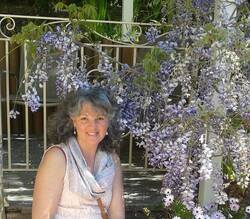 a pearl in this diamond world … Josephine LoRe’s words have been read on stage and in Zoom rooms, put to music, danced, integrated into paintings & visual art, and published in literary journals and anthologies in ten countries. She has two collections, Unity and the Calgary Herald Bestseller The Cowichan Series.
https://www.josephinelorepoet.com/
8 Comments
An Gorta Mór (The Great Hunger) Ireland 1845 - 1852 I Ireland. The aching. Stomach tight, skin taut, stretched across poking ribs. Mo dhia, prataí ar maidin agus prataí ar nóin mar a duirt an file -My God, potatoes in the morning and potatoes in the evening, - as the poet said - A hot clammy Summer. Potatoes! Lifegiver! dragged from the earth with fevered hands, dirt scared nails, scratching, digging the mulched black thing, cloying to the touch, from the earth. A fouled death stench, from what had been a potato. A sábhála Dia orainn! - God save us! - Níl aon rud eile againn! - We have nothing else! The Land bereft of it's nourishing harvest; potatoes. Even along the coast, the boats are no more, in the cities if you have the money for the inflated prices at the food markets, and islands where there is fish, there is some salvation, if you have the strength and skill to catch them. If you have a currach to set sail to find them, or the ragged groups of women and girls, chipping reluctant shellfish from the sea drenched rocks, or, eating raw seaweed to ease the knawing need, their guant frames poisoned, leading to the agony of death without hope. Cad a Déanfaimid anois? - What will we do now? The cravings, walking barefoot, to the Landlord's House, the smell of cooking from his kitchen. Turned away by his bailiffs with masks about their faces, to hide the stench of human despair. Food. Scenting like hunting dogs, the imagined taste on the air, like ragged unseeing things, they stagger across moor and heath. The mountain wind, cutting through to the bone, II the chill of streams crossed numbing their bloodied bare feet, staring unseeing, with grass-juiced mouths, the final act of despair and madness, dripping from slack jawed lips. Dying in heaving gasps, amidst a mountained landscape, falling to emerald beauty to the quiet of field and valley. The last sight and sound they see, lying face up, in a ditch, or on the side of the road, watching with the indifference of the dying, the slow moving gunmetal clouds pasted across a cold sky, reflected in their eyes. A raven hovering, feathering a winged beat for the approach of endless night. A lonely cry on the air, notes their passing. A lonely place to die, by the roadside, a light breeze, bending blade of grass and petalled flower, fingers clawing the earth in a final rigor of agony, before blessed death takes them. An Gorta Mór: 1845-1850 Click on the file to listen to Tony read the poem:
 Tony Treanor is an Irishman living in Limerick on the Mid-West coast of Ireland. He has enjoyed writing and reading poetry all his life.
Laura Mulcahy, Irish Singer and Poet, presents her moving song/poem, Sunken Cemetery, 1849, about emigration caused by the Irish Famine.
Several musicians and poets join her in this tribute. https://www.youtube.com/watch?v=3ypRiYttVGE&feature=emb_logo The Wait As I write Someone, somewhere Waits- I imagine "What it is";, to say Hungry and stay, that way And if- She could be, my friend At lunch A table well laid- When asked "Are you a vegetarian", I remark Hunger has no caste- It eats, itself, and lasts Longer than You and I, ever thought. Click on the file below to listen to Abha read her poem:
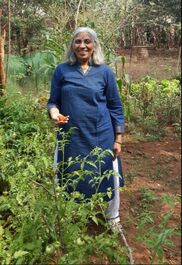 Abha Das Sarma lives in Bangalore, India.
An engineer and management consultant by profession, writing is what makes her happy and fulfilled. Cold Chicken Its raining, and windy no shelter from the cold I’m ailing, though young still, I am really feeling old Christmas is coming, I still can’t find a home No money, no shelter Wandering the streets alone My shoe won’t stop leaking my toes are turning green My stomach is so empty I wish that I was clean Searching through the rubbish For something nice to eat A leftover chicken leg A succulent, seasonal treat Nourishing, but still hungry What else is there to do? I approach a stranger and say “A merry Xmas to you.” Here is the video of Fin reading the poem: https://youtu.be/V3IKFdKJm8E  Fin Hall is from New Pitsligo, in the North East of Scotland. He has been writing since the early 70’s. He hosts a Zoom Event called Like A Blot From The Blue. Fin's work mainly focuses on social issues as well as reflective personal stories.
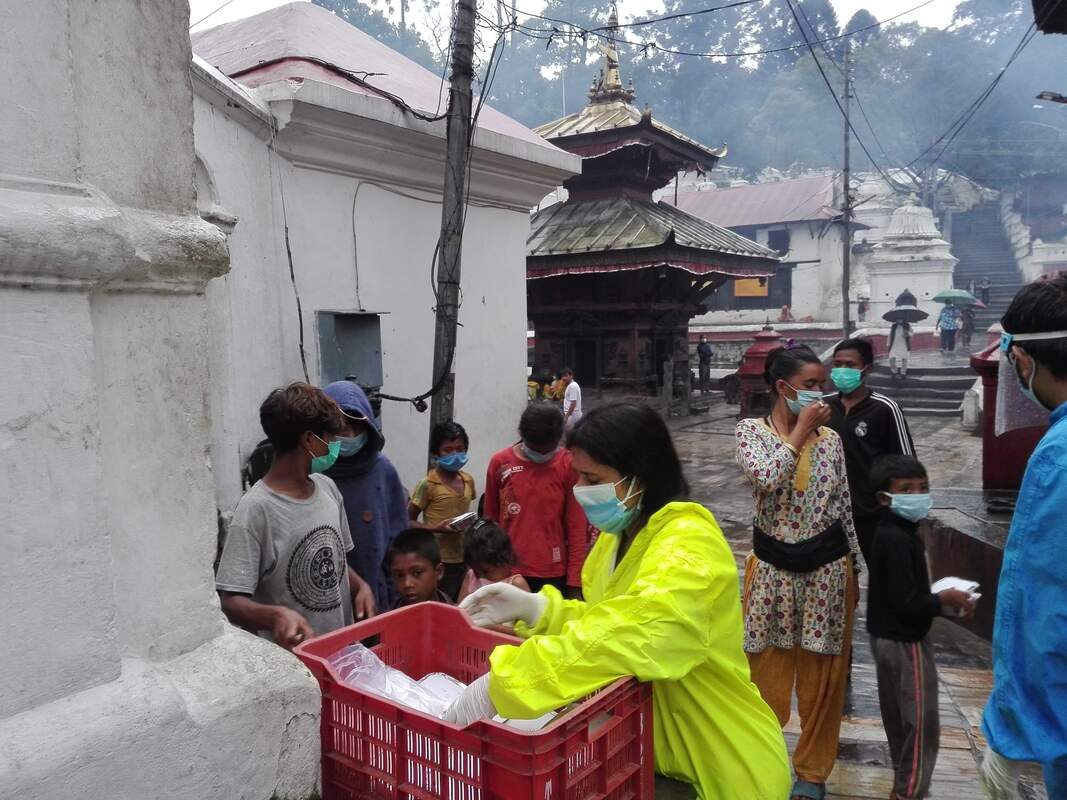
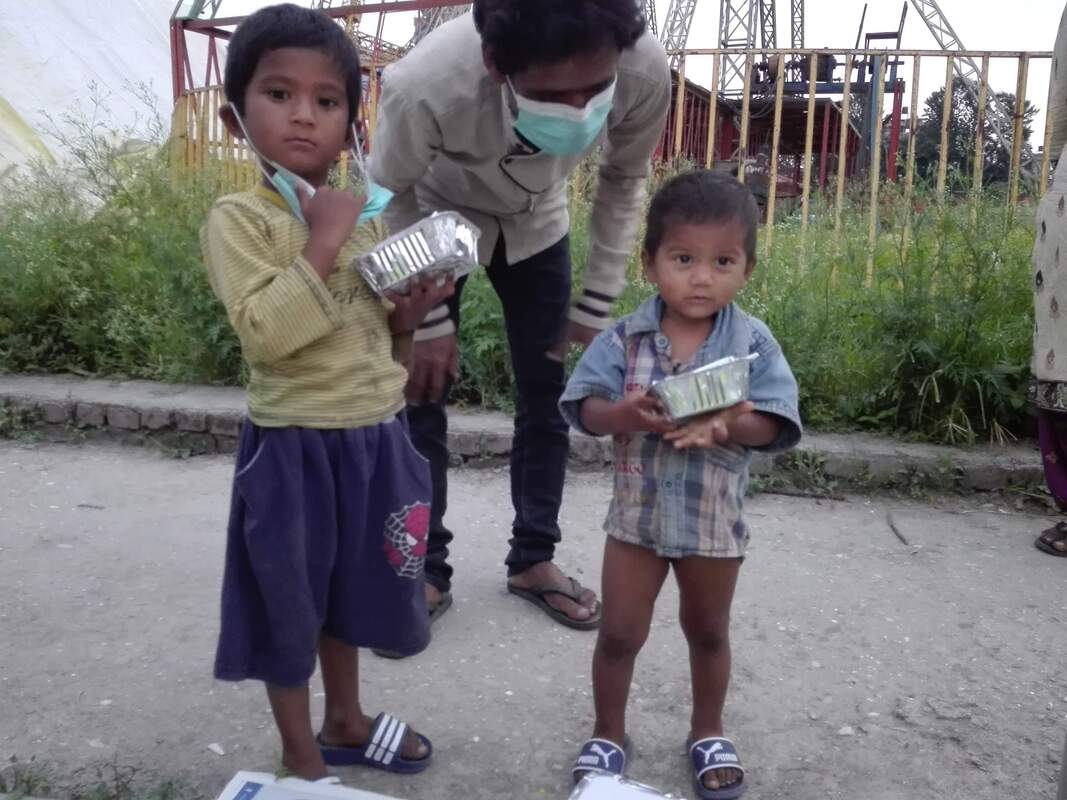
No time for poetry The big lineup in front of the food tanker a mother holds a paper plate in her right hand drags a child with the left the loudest crowd ever to get meals to their children there I saw myself fragmented into thousands of humans and my soul in silence looking for an answer Photo credit goes to Dr. Archana Pokharel Click on the file below to listen to Sharmila read her poem:
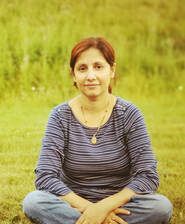 Sharmila Pokharel is a bilingual poet from the Himalayan country Nepal. She has published two collections of poetry in her native language. She immigrated to Canada in 2010.
Her third book was a bilingual poetry collection My Country in a Foreign Land, co-translated by Alice Major. She is a co-author of Somnio: The Way We See It, a poetry and art book published in 2015. Great Changes “Deaths and marriages make great changes.” That’s what they used to say, In a general way, Not specific to the Famine. There were too many deaths then. They were too close. Dying was a failure. That wasn’t spoken of. It was lived out of. It cut a deeper line Of before and after Than Independence, the change From rulers to leaders. It removed or erased so many It changed Ireland. It changed land ownership From up and down to the middle. The strong farmers rose. Their cattle conquered crops. Marriages were made to unite fields. In a domestic commerce Resources were invested for The future in a son and A son a priest for good measure Was a measure of success. Women served purposes. Their speaking was sanctioned In self-betraying confessions To oppressive clergy. Their lives went to the farms Their love to the productive sons. Their marriages were fodder For literature. The absolution of lost knowledge Comes slowly on the land. Roots grow from our feet. My grand father struck a man Who, in drink, accused my forebears Of the theft of fields from his forebears, After the Hunger. In the Cromwellian phrase of West Limerick- My grandfather “falled” him. Who will know now in that place The story or the truth? These many years later We appear to be recovering From that disease of the blood- The fear of want. The roots growing from our feet Are shorter. We can love and leave the land. There are changes. Click on the file below to listen to Rena read her poem:
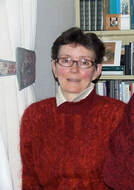 Rena Fleming grew up on a farm in Co.Limerick and now enjoys the landscape and the shores of Galway Bay.
Dinner for One I remember the angst of scavenging for nourishment; the excitement when sustenance was found in a tin of spam selected from the self-service menu in a kitchen cupboard slammed with a bang, breaking up an otherwise stony silence while preparing dinner for one No distraction from acrid smell of poverty, an airborne virus infecting my nostrils attempting to satisfy growling malnutrition need because very child needs a daily feed, no point in letting the situation bread contempt as who gives a shit about trying to represent the groundhog day of the twisted event that although lonely was still a highlight when imminent; my desolate dinner for one. My parched lips washed it down with unfiltered tap water consumed while perched on a rickety chair, wobbling as if laughing at my misfortune sitting there. A chipped orphan plate scorning hungry eyes always lowered, scarred from my mother’s glares filled with despise, familiarity in that crockery that saw behind the scenes mockery towards child welfare that forgot to be there to witness my dinner for one. The pièce de résistance dished up on scratched pine surface barren of pretty tablecloth, not ever needed since I’d never dare spill a drop. Even if I did I’d use my tongue as a mop to make the most of my dinner for one. Indigestion took hostage of my stomach when I too quickly crammed tasteless morsels into my young mouth that hung open, forgetting to close with the chew, table manners were never something taught by you, fingers my utensils, there was no silver spoon to shovel in my meal because mother would be home soon. Needed time to wash up, no excuse for her to raise hand to beat me black and blue for being so bad. It was cold in the bosom of the kitchen without the oven on. Why waste energy serving up dinner for one? Here is the link to the video of Kelly reading her poem: https://youtu.be/nC_Q0qqZCEQ  Kelly Van Nelson from Sydney, Australia is the #1 bestselling author of Graffiti Lane and Punch and Judy. Her poetry has featured in numerous international publications and she regularly discusses social issues in the media. Her books are frequently gifted to celebrities, including Hollywood Oscar winners. She is the recipient of a KSP First Edition Fellowship, winner of the AusMumpreneur ‘Big Idea Changing the World’ Award for her literary impact as an antibullying advocate, and Roar Success winner for Best Book and Most Powerful Influencer. In the spare time she doesn’t have, she hangs out on the open mic performing poetry. She is based in Sydney, Australia and is represented by The Newman Agency - www.kellyvannelson.com.
TOWARDS LECANVEY (i.m. Famine Walk 31/3/1849) Stop a moment by the idle wall, look right to the red rusting boathouse, tall trees whispering, sheep bleating. Look left, follow the waves, their bluegreen sheen domed by the sky, bend and dip with the coast road. Long fingered land lingers, to reappear as humpbacked hills dotting Clew Bay. Clouds scud across Croagh Patrick, colour changing as you watch. Four hundred walked to Delphi Lodge in search of food. They lie among potato drills, roofless abbey walls, standing stones, yellow furze. The rise of land dominates, insists that you walk on it, admire it and know your place in the scheme of things. You can listen to Ger Duffy reading her poem by clicking on the file below
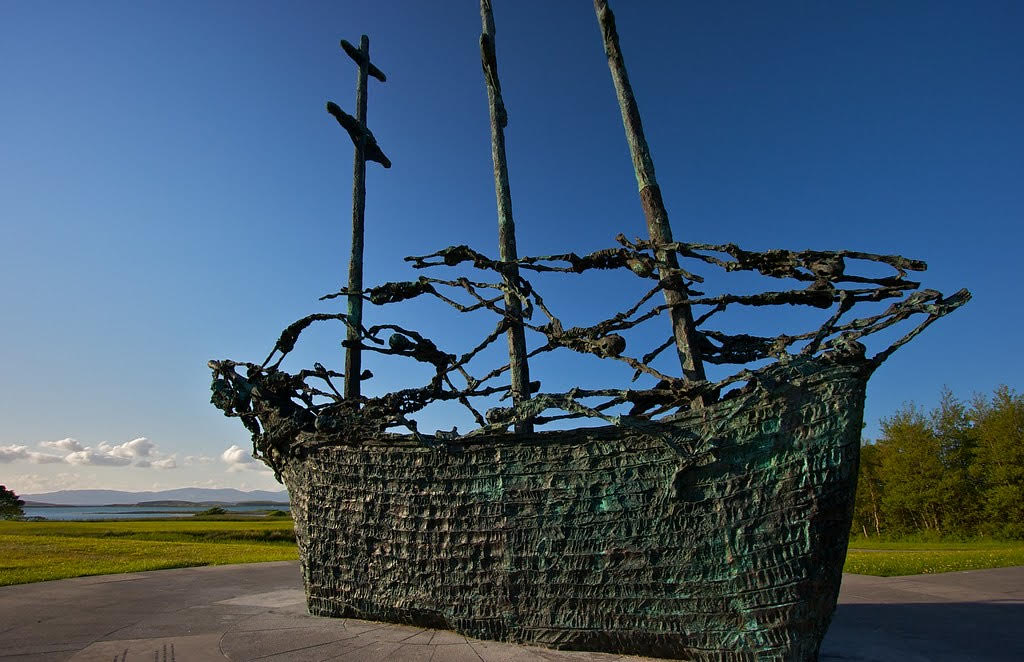
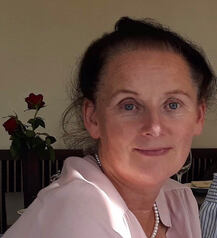 Ger Duffy lives in Co. Waterford, Ireland. Her poetry and fiction has been published by Slow Dancer Press, The Women’s Press, The Viking Press and Sheba Press. She holds a PG DIP in Creative Writing from Goldsmiths College, an MA in Screenwriting from University of Westminster, London. National Famine monument at Murrisk/Lecanvey, Co. Mayo, Ireland. The sculpture pays homage to the victims of the Irish Famine (An Gorta Mór) and especially to Irish people who emigrated to the United Sates to escape death, with no guarantee of arriving alive.
Bengal Famine, 1943 Spewing fine Cuban nicotine, some two-thirds stupefied with Pol Roger, He fulminated over Gandhi (“that nauseating, malignant and seditious, Half-naked, fanatical fakir”), as he always did those nights. “The Indians Are beastly people”, growled the Greatest Briton in that fake put-on voice, With bellicose pomposity, which dreadfully impressed his sycophants, “Practising Their foul religion. Sending them food would just encourage them to breed.” He pouted at the paper, grunted and upon it scrawled, with brandy-trembling hand, ‘Inaction this day’. Marlborough’s descendent snorted and then returned To his cigar. Three million starved to death. No epitaphs upon Bengali graves. He and his acolytes composed the histories. His legacy remains secure 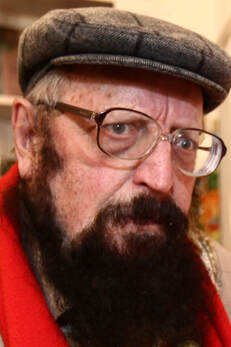 Mike Douse has a lifetime's immersion in education: his first assignment in Bangladesh was in 1966 and his latest there - looking at technical education for the International Labour Organisation - is ongoing. A collection of his articles, essays and conference contributions, entitled An Enjoyment of Education, was published in 2014 and he has published two anthologies of poems: Old Ground and Gone to Ground. Mike lives in mid-Wales with his dear wife Patricia.
|
AuthorsYou can find poets' names under Categories Archives
April 2024
Poets
All
|
|||||||||||||||||
 RSS Feed