|
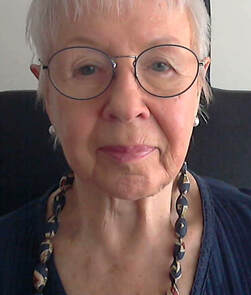
When We Didn’t Know We Needed More Until ‘more’ is seen Contentment flows in less. Freshly baked bread The few photos from that time show a lanky brother, too thin and tall by far, a pretty, but too slender mother, her hair strictly drawn off her face, wound into a bun, and this kid with a flower-pot cut in a white blouse, puff sleeves and checkered skirt, legs with knobby knees going on forever, up, up... but then, the photo was taken from below the little hill on which we posed. We ate. Most of the time. Vegetarian by default, forays into meat making us sick, our system wasn’t used to the heaviness of animal protein. I once got a rash all over my body because my mother, generously and happily, spread my bread with lard my father had sent in a battered old aluminum flask, leftover from someone’s trench warfare. When our landlady planned a birthday party for her baby boy, we had no idea. She’d obviously saved flower, butter, sugar from her ration card and probably bought some extra on the black market. Then she set to baking, glazing, creaming, sugaring. That day we sat at the birthday table she beamed across to us all: ‘Guten Appetit!’. After a while most of us felt sick. One little boy began to cry. We all turned to him and asked with our eyes... He sobbed: “I wanted to try a bit of every cake. That one with the dollop of cream on top I haven’t touched, and I can’t. I can’t! I am too full.” Until ‘more’ is seen Contentment flows in less. Freshly baked bread A German-born UK national, Rose Mary Boehm lives and works in Lima, Peru. Author of two novels and eight poetry collections, her work has been widely published in US poetry journals. www.rose-mary-boehm-poet.com
0 Comments
About Bread, Germany, 1944 I can see myself. A small girl. White vest, black, ballooning shorts, handmade. She stands on a milestone, giving her the height to overlook the wheatfield, trying to see the wave. In the distance a cuckoo calls. The children have finished picking out the potato beetles and their larvae by turning over each leaf, walking slowly through the field where row after row of the potato green thrives, ready for August. I see the girl in front of the big farmer’s wife, her apron a sea of colours, here and there slightly soiled. The woman presses the big round loaf against her swelling belly, cuts it in half and hands the child a slice as long as two of her hands after spreading some lard. The girl is walking home from the bakery. The baker lady cut out two coupons from the ration card. Under the child’s left arm, a big, crusty loaf. With her right hand, and an experienced finger, she hollows the bread through the crust from the exposed end. At this moment she doesn’t think about consequences. They picked up the last wheat from farmer Braun’s field after he finished the harvesting. Mother carried it home in a bag she’d brought. Left the stalks to dry on the windowsill, beat out the grains. She sits, the coffee mill between her legs, her dress sagging between her thighs. If we find enough firewood, we’ll have a small fresh loaf tomorrow. If the train doesn’t get bombed, Father will arrive just in time. From her poetry collection LIFE STUFF, Kelsay Books November 2023. Glamour Aunt Lil wore her black hat at a coquettish angle, its little veil pulled over her forehead. She was Arpège and blood-red lipstick, long, pointed fingernails to match, nylon stockings, everything I wanted to be one day. She bought me ‘Schillerlocken’*. My uncle was a lawyer, a tall tree in a forest of lesser trees. He seldom bent down to my ten-year-old, somewhat undernourished body. With a stentorian voice he hinted that I was making a nuisance of myself just by being a kid. I found out later that he had always thought my mother a creature of a lesser race. She didn’t speak like one is used to hearing. It was whispered behind fluttering hands that Aunt Lil had been a barmaid. Now she was the wife of a professional, was perfume and lace, and a deep-red slit replaced her mouth when she laughed. Which she didn’t do often. The idea that this childless couple would look after me for ten days while my mother went back to East Germany (in danger of being sent to a Russian gulag if caught) to sort out the lives we left behind in a hurry had been hammered out between the women. Uncle Fried looked at me across the huge dining table as he would a fly and frowned. ‘Has nobody shown you how to eat with knife and fork, child?’ My voice not quite steady from fear: ‘We had nothing to cut, Uncle.’ * “Schillerlocken” is a sweet, cone-shaped German pastry. The name was inspired by the typical curly wigs that men, like the German poet Friedrich Schiller, used to wear in the 18th century.” From her poetry collection LIFE STUFF, Kelsay Books November 2023. BIO: A German-born UK national, Rose Mary Boehm lives and works in Lima, Peru. Author of two novels and eight poetry collections, her work has been widely published in US poetry journals. www.rose-mary-boehm-poet.com
The Beggar A sharp wind makes me pull down my hat, tighten my coat. "Bloody freezing, innit." He has no gloves. His blue swollen fingers barely close around the cup which rattles in response to the few coins I let drop. "Thanks, mate." He huddles a little deeper into the recess by the bank’s cash machine. "They should move them on. Bring the neighbourhood down." I turn. The owner of the complaint is tall, blonde, sheep-skinned, with tell-tale signs of trying to stem the tide of aging. I suddenly feel guilty by association. Because I gave him so little? Because I gave at all? Because I smiled at her? We Didn’t Know We Were Poor Sometimes we went hungry, but not much. Mother made dandelion salad and stingy- nettle soup. Potatoes and carrots in water with salt. Mother had been on the train again to visit farmer Ruttenberger. Left our last silver flatware with his wife. Brought back a big sack of rye. Can see her still, her too large dress, her apron, the coffee machine between her thighs, milling. Everyone was the same. You don’t notice if you have nothing to compare yourself to. My scary aunt with the deep voice and a wart on her chin would send us into the woods: ‘Don’t you go eating the blueberries now. Bring them home, you hear? I need them for jam making.’ There was a place near the brook, where the world smelled of woodruff and ceps, where bluebells announced our indelicate approach. Getting back empty-handed, round-eyed and honest-to-god we hadn’t found even one, my aunt wiped blue-purple stains from our guilty faces while winking at my mother. My uncle is looking for his cat with a darkening face. ‘I’ll find out who ate her!’ When I was Six I remember the smell of earth after summer rain, the high grass hiding me. It tickled, pinched and stung. I followed the activities of beetles, caterpillars and assorted small life. Rolled myself packages of sorrel; chewing them despite the acid was the challenge. Being hungry helped. The lark slowly climbed into blue. Became a small black dot, trilling ecstatically. My summer vision was framed by green stalks of long grasses and their seeds. Standing on a milestone I saw the fields covered in shimmering heat, warping invisible air. Cornflowers and poppies between sandy-yellow wheat. There would be a good harvest. Yes, even then I knew about harvests, watched the sweating man and their flails. Sometimes I’d take home a pocket-full of grains. Mother wiped my face, hands, knees. My feet permanently calloused. The grains ground in the coffee mill held firm between mother’s legs. That last summer before next May when strange men came in planes, tanks, and jeeps, I watched André riding the brown back, his face lit by the evening sun, watched the oxen pulling carts, watched the plow grooving black furrows for the autumn field, watched the swarms of mosquitoes dance over the stagnant pond and fell in love. Rose Mary Boehm is a German-born British national living and writing in Lima, Peru, and author of two novels as well as seven poetry collections. Her poetry has been published widely in mostly US poetry reviews (online and print). She was twice nominated for a ‘Pushcart’, once for ‘Best of Net’. www.rose-mary-boehm-poet.com |
AuthorsYou can find poets' names under Categories Archives
October 2025
Poets
All
|